
Lambda Research, Inc
Lab Analysis-Measurement Services
Our Laboratory Services specializes in Residual Stress Measurements, Other Types of Measurements & Analysis. Materials testing helps determine if critical components can withstand the load and stress conditions of operations.
With 200+ years of combined experience and more than half a million completed measurements, Lambda is a name people trust.
We are accredited by the American Association for Laboratory Accreditations (A2LA) in accordance with ISO/IEC 17025. We design and develop our own measurement instrumentation, data collection, and data reduction software.


Residual Stress Measurement >
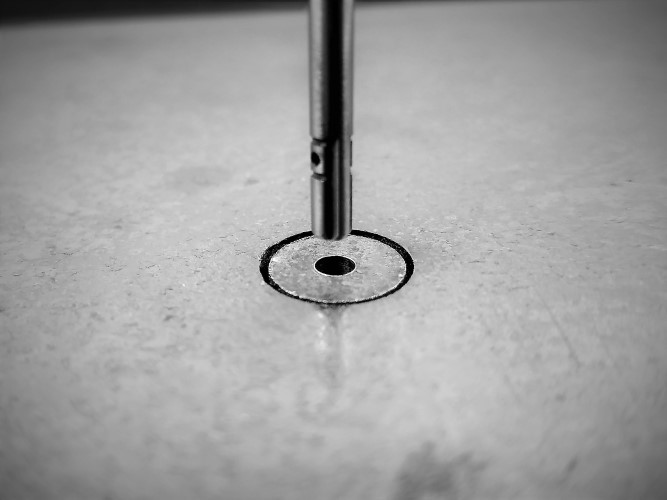
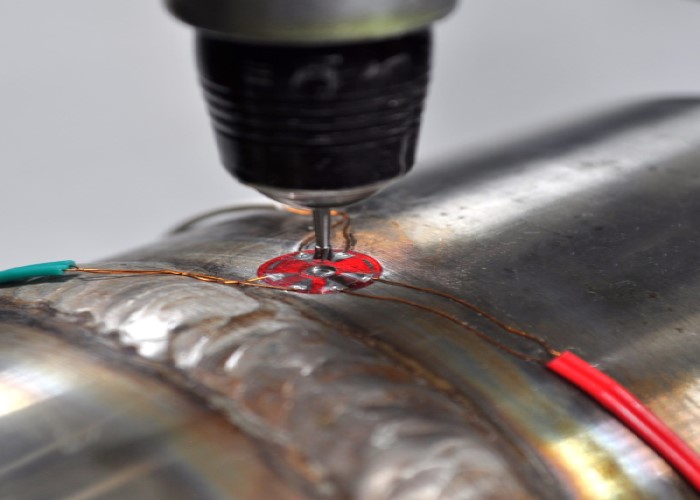
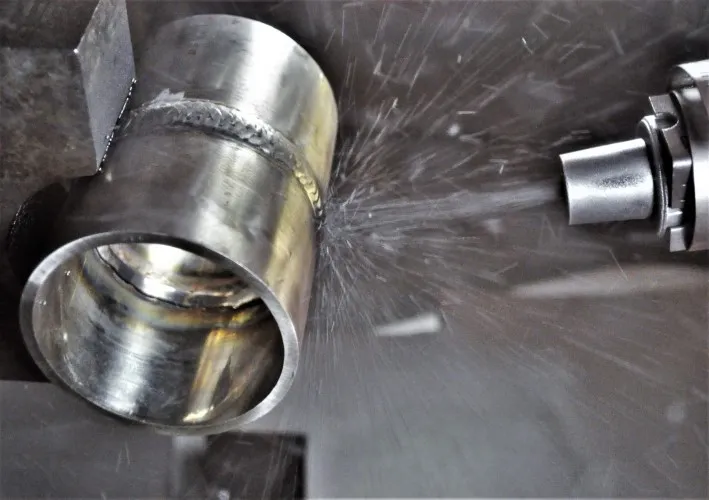
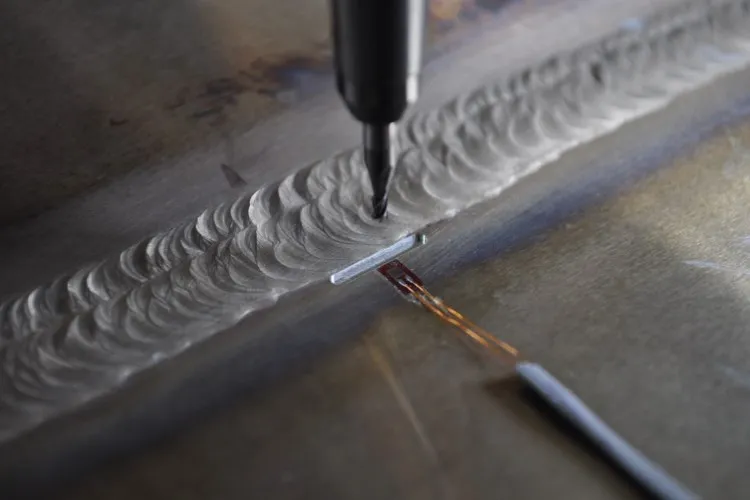
We are the preeminent source of residual stress measurement using X-ray diffraction and mechanical residual stress measurement methods.
Retained Austenite Measurement >
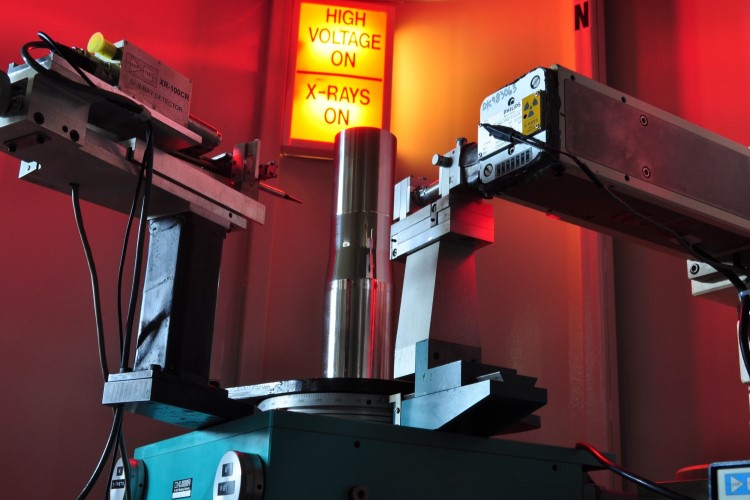
We are the only accredited, independent laboratory using Bragg-Brentano diffractometers in strict adherence to ASTM E975 and SAE
SP-453 specifications.
Phase Analysis >
We offer a broad array of X-ray diffraction and fluorescence testing capabilities in the areas of qualitative and quantitative phase analysis.
Crystallographic Texture
& Orientations >
We have extensive experience determining crystallographic texture or preferred orientation in a wide variety of materials and forms.
Crystallite/Lattice Parameter Measurement >
We use X-ray diffraction to determine crystallite size and microstrain; we determine precise lattice parameters using powdered or solid samples.
Surface
Integrity >
We provide comprehensive testing and engineering for the design of surface treatment and machining processes to increase the life of your parts.
Finite Element
& Modal Analysis >
We provide finite element analysis in support of residual stress design and characterization, and modal analysis to determine the natural frequency of components.
Non-Destructive Testing (NDT) >
We provide an assessment of part and system integrity through the characterization of flaws and defects.
Fatigue Testing >
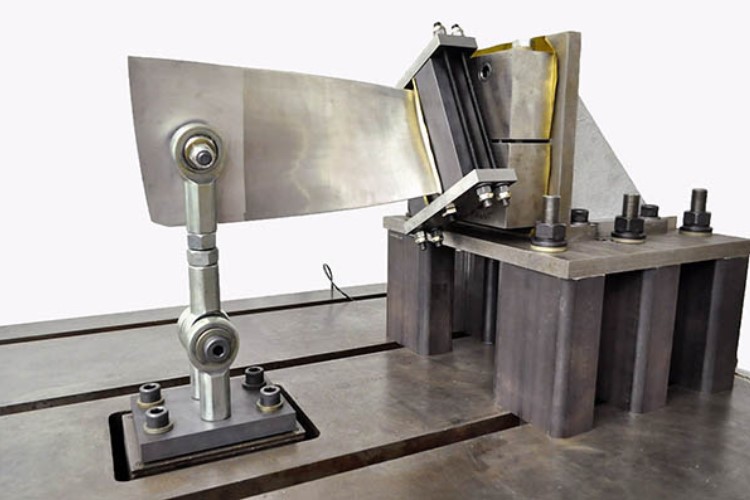
Fatigue testing plays a critical role in determining component durability and provides the means for designing and optimizing surface treatments.
Lifing Analysis >
We assess the design of critical components subjected to cyclic loading & the fatigue life of the finished part.
Failure Analysis >
We use state-of-the-art equipment and advanced modeling techniques toat provide comprehensive failure analysis.
LRI® Frequently Asked Questions
What techniques are available for residual stress measurement at Lambda?
Lambda offers multiple validated techniques for measuring residual stress, selected based on material, geometry and measurement requirements.
Available methods include:
- X-ray diffraction
- Center hole drilling
- Ring core
- Deep hole drilling
- Slotting
- Bulk sectioning
- Tube splitting
What materials can Lambda evaluate?
Lambda routinely evaluates metallic, ceramic, and polymer materials. Our engineers will help determine what measurement methods are best suited based on testing requirements and part material.
What standards and certifications guide Lambda’s laboratory measurements?
Laboratory measurements are performed in accordance with recognized national and international standards, including A2LA, ASTM, SAE, ISO, and National Physical Laboratory (NPL) guidelines. Measurement procedures are selected and validated based on the technique used, the material being evaluated, and the intended application of the results.
A full list of our certifications and guiding standards can be found here: https://www.lambdatechs.com/certifications-accreditations/
Are Lambda’s measurements suitable for qualification, validation, or regulatory use?
Yes. Lambda’s laboratory data and reporting are routinely used to support qualification programs, process validation, failure investigations, and regulatory or customer compliance requirements. Applicable standards, documentation needs, and reporting formats are addressed during project planning to ensure results are suitable for their intended use.
Does Lambda offer non-destructive testing (NDT)?
Yes. Lambda offers non-destructive testing methods that allow for material evaluation without damaging the component. NDT options, including x-ray diffraction, x-ray fluorescence, and eddy current, are selected based on the measurement requirements and geometric constraints.
How do I request a quote or schedule testing with Lambda?
Testing can be requested by contacting Lambda online here. You may also email our engineers at info@lambdatechs.com or call us at 1-513-561-0883.
The process typically includes:
- An initial discussion of the component and objectives
- Identification of appropriate laboratory or engineering services
- Development of a proposed test scope, schedule, and quote
What information is needed to request a quote or start a project?
The most basic information required includes:
- Type of test
- Material or alloy
- Part geometry and dimensions
- Number of specimens or components
Additional details help Lambda develop an efficient and technically appropriate test plan:
- Manufacturing or processing history (e.g., machining, heat treatment, surface treatments)
- Areas of interest and measurement locations
- Desired measurement directions or depths
- Performance concerns or suspected damage mechanisms
- Whether the work supports qualification, validation, or failure analysis
Engineering drawings, photographs, and prior test data are useful when available.
Can multiple tests be combined in a single program?
Yes, multiple tests can be combined to provide several material properties. Measurements like residual stress, retained austenite, x-ray fluorescence, hardness and failure analysis are commonly combined to provide a more complete understanding of material condition and performance, leading to more effective technical conclusions.
Can Lambda help determine which services are needed?
Yes. Lambda engineers work with customers to understand the component, material, manufacturing history, and performance objectives. Based on this information, an appropriate combination of laboratory testing and analysis is recommended to address the specific technical questions or concerns.
What types of fatigue testing does Lambda perform?
Lambda performs both high-cycle and low-cycle fatigue testing to characterize how residual stress, surface condition, and damage mechanisms influence fatigue strength and damage tolerance.
Fatigue testing capabilities include:
- High-cycle and low-cycle fatigue testing to quantify the influence of residual stress on fatigue performance
- Rotating beam fatigue testing (R.R. Moore–style tester)
- Rolling contact fatigue testing
- Design and manufacture of custom fatigue test specimens and fixtures
- Custom-designed specimen features to measure the effects of residual compression in unique or complex geometries
- Load capacities up to 50,000 lb
- Fatigue testing with simulated damage, including foreign object damage (FOD)
- Active corrosion fatigue testing
- Elevated temperature fatigue testing
- Continuous compliance monitoring during testing
- Instrumentation of component specimens for accurate stress and load monitoring
- Video capture of crack initiation and crack propagation
Fatigue testing is frequently combined with residual stress measurement and surface integrity evaluation to provide a complete understanding of durability and life-limiting mechanisms.
What information is included in failure analysis?
Lambda provides comprehensive failure analysis to determine why a component failed and how to prevent similar failures in the future. Engineers combine advanced testing, modeling, and interpretive tools to identify root causes and recommend solutions that improve strength, life, and reliability while reducing costly rework or downtime.
Failure analysis capabilities include:
- Quantitative and qualitative fractographic analysis of fracture surfaces
- Determination of failure mechanisms such as fatigue cracking, stress corrosion cracking (SCC), overload, and environmental damage
- Calculation of stresses at the failure site using fracture mechanics principles and stress analysis
- Use of advanced microscopy (e.g., SEM) and analytical tools to document crack growth, fatigue striations, and material behavior
- Application of modeling and engineering analysis to support interpretation and corrective recommendations
- Documentation of failure chronology and contributing factors with clear reporting for technical decision-making
The goal is to provide not just what failed but why it failed and provide possible solutions to mitigate failures in the future.
How are surface treatments used to introduce beneficial residual stresses?
-
Surface treatments such as shot peening, low plasticity burnishing, laser shock peening, and roller/ball burnishing are used to intentionally deform the near-surface material. This imparts compressive residual stresses that counteract service tensile loads, preventing crack initiation and growth. By carefully controlling process parameters, these treatments can be custom designed to improve fatigue life, damage tolerance, and mitigating stress corrosion cracking.
Here is a link to case studies of fatigue life improvement by surface treatments: https://www.lambdatechs.com/wp-content/uploads/2022/03/238.pdf
How is depth profiling performed during X-ray diffraction residual stress measurement?
- Depth profiling using X-ray diffraction is performed by sequentially removing thin surface layers, through controlled electropolishing, and measuring residual stress after each removal step. This process allows characterization of stress as a function of depth below the surface.
How deep into a component can residual stresses be measured?
- Measurement depth depends on the technique used. X-ray diffraction with layer removal is commonly used for near-surface stress profiling, while mechanical methods such as hole drilling, ring core, and deep hole drilling can measure residual stresses at greater depths, ranging from fractions of an inch to several inches below the surface.
What do these terms in my report mean?
-
Residual stress reports include standardized terminology to describe stress magnitude and orientation:
- What do the “+” and “–” signs indicate?
Positive values represent tensile stress, while negative values represent compressive stress. - How are “Maximum” and “Minimum” principal stresses defined?
The maximum principal stress is the most tensile stress, and the minimum principal stress is the most compressive, regardless of sign convention. - What do the PHI and BETA values represent?
PHI and BETA describe the orientation of the principal residual stress relative to a defined reference direction, using different angular conventions. - What is the difference between macro (Type 1) and micro (Type 2) residual stresses?
Macro residual stresses occur over large regions and influence the whole part or assembly, while micro residual stresses arise within or between grains, affecting localized behavior such as hardness and cold work percentage.
Our engineers would be happy to discuss your report with you if you have any questions.
- What do the “+” and “–” signs indicate?
What laboratory and engineering services does Lambda offer?
Lambda Technologies Group provides a comprehensive range of laboratory testing and engineering analysis services that can be combined to evaluate component performance, durability, and reliability.
Services include:
- Residual stress measurement
- Retained austenite measurement
- Qualitative and quantitative Phase analysis
- Crystallographic texture measurement
- Surface integrity evaluation
- Fatigue testing and lifing analysis
- Surface treatment optimization
- Finite element analysis (FEA)
- Modal analysis
- Failure analysis
Learn more about the broad range of laboratory services offered by Lambda Research